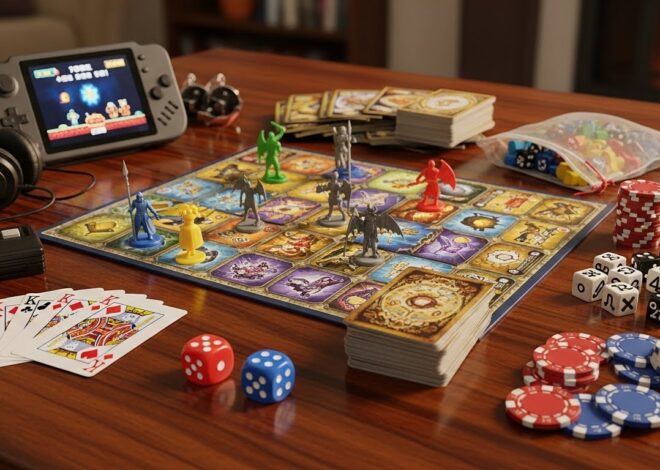

The Evolution of Games: From Simple Play to Global Phenomenon
Introduction: The Timeless Power of Play
Games have been an integral part of human culture for centuries, providing entertainment, social interaction, and even educational value. Whether played in the form of board games, card games, or digital simulations, games offer something that transcends generations and cultures. The gaming industry, particularly video games, has experienced tremendous growth in recent years, transforming from a niche hobby to a massive global industry. Today, games are not only a form of entertainment but also a significant part of our social fabric, influencing everything from technology to culture. In this blog, we will explore the evolution of games, focusing on how they have transformed over time, the reasons behind their widespread appeal, and the ways they continue to shape our lives.
The Origins of Games: Early Forms of Play
The history of games dates back to ancient times, long before the invention of video games or even modern board games. Early games were often simple, physical activities that encouraged socialization, skill development, and sometimes even spiritual significance. Ancient civilizations like the Egyptians and Mesopotamians played games that were often symbolic of life’s journey, including the game Senet, which is considered one of the oldest known board games in history. These games were not merely a form of entertainment but were also intertwined with cultural beliefs and practices.
As time progressed, cultures across the world developed their own games, including chess in India around the 6th century, Go in China, and backgammon in ancient Persia. These games were primarily played by the elite and intellectuals, offering strategic challenges that tested the mind and fostered social interaction. The medieval period saw the rise of card games, which became widespread across Europe, as well as the popularization of dice-based games. These early games helped lay the foundation for the complex gaming systems that would eventually emerge.
The Birth of Modern Gaming: Video Games Enter the Scene
While games have always played a significant role in human culture, the landscape of gaming truly transformed in the 20th century with the invention of video games. The first commercially successful video game, Pong, was released by Atari in 1972, and it quickly captured the public’s attention. Pong, a simple two-dimensional table tennis simulation, represented the dawn of the digital gaming age. Its success led to a surge in arcade games, with titles like Space Invaders and Pac-Man becoming global phenomena. The 1970s and 1980s witnessed the rise of arcade gaming, where players gathered in public spaces to challenge each other for high scores.
The early video games were simplistic by today’s standards, but their impact was profound. The graphics were basic, and the gameplay was straightforward, but the experience of interacting with a machine in this new way captured the imagination of millions. Video games began to evolve, and by the 1980s, home consoles like the Nintendo Entertainment System (NES) and the Sega Genesis made it possible for players to enjoy games in the comfort of their own homes. These consoles introduced a new level of accessibility and convenience, allowing players to enjoy more sophisticated titles like Super Mario Bros., The Legend of Zelda, and Metroid.
The Rise of Online Gaming: Connecting the World
While the 1980s and early 1990s were a golden era for home console gaming, the next major shift in the gaming world came with the rise of online gaming. The advent of the internet in the late 1990s revolutionized how games were played, as it allowed players to connect with others across the globe. One of the first major online multiplayer games was Ultima Online, launched in 1997, which created a virtual world where players could interact in real-time. This paved the way for the massive growth of multiplayer online games in the early 2000s, with titles like World of Warcraft, Diablo II, and Counter-Strike allowing players to battle against each other or cooperate in virtual worlds.
The introduction of broadband internet also made online gaming more accessible and reliable, enabling smoother, more stable connections. As the internet became an essential part of daily life, gaming companies began to design games specifically for online play, leading to the rise of Massively Multiplayer Online Role-Playing Games (MMORPGs). These games offered expansive virtual worlds, where players could create characters, form guilds, and complete quests together. The success of World of Warcraft, in particular, marked a turning point in the development of online gaming, with millions of active players logging in daily to explore the world of Azeroth.
Online gaming didn’t just change how players interacted with games—it also transformed how they interacted with each other. The rise of social gaming platforms like Steam and Xbox Live allowed players to connect, communicate, and play together more easily than ever before. The introduction of in-game chat systems, voice chat, and friends lists made multiplayer gaming a more interactive and social experience, bringing gamers together in a digital community.
Mobile Gaming: The World in Your Pocket
The next major shift in gaming came with the widespread adoption of smartphones. Mobile gaming revolutionized the way people play games by making them more accessible and portable. Games like Angry Birds, Candy Crush, and Clash of Clans introduced millions of people to gaming, many of whom had never considered themselves gamers before. Mobile gaming offered a quick, accessible experience that could be enjoyed in short bursts, making it ideal for people on the go.
One of the key aspects of mobile gaming’s success is its accessibility. With the majority of people owning smartphones, developers could create games that were easy to pick up and play, requiring little to no prior experience. The rise of free-to-play models, where players could download and play games for free but pay for in-game content or upgrades, also made mobile gaming more appealing to a wider audience. This model has become a dominant force in the mobile gaming market, with games like Fortnite and PUBG Mobile leading the way.
In addition to traditional mobile games, augmented reality (AR) gaming also gained popularity with titles like Pokémon Go, which encouraged players to explore the real world while capturing virtual creatures. The use of AR in gaming is still in its early stages, but it has the potential to create entirely new ways of interacting with games and the world around us.
Esports and the Professionalization of Gaming
While gaming has always been a competitive activity, the rise of esports has elevated it to a professional level. Esports refers to organized, multiplayer video game competitions, often between professional players, teams, and organizations. Games like League of Legends, Dota 2, and Counter-Strike: Global Offensive have become major esports titles, with professional leagues, tournaments, and sponsorships offering millions of dollars in prize money.
The esports industry has grown exponentially in recent years, with major tournaments being broadcast on platforms like Twitch and YouTube, attracting millions of viewers. Esports has become a legitimate career for many, with professional players earning substantial salaries and sponsorship deals, while esports organizations sign players and field teams for competitive events. The development of esports has also led to the rise of esports academies, coaching services, and broadcasting careers, further professionalizing the industry.
Esports has also fostered a global community of fans, who follow their favorite players and teams, attend live events, and participate in online discussions. The competitive nature of esports has brought a new dimension to gaming, turning it from a casual hobby into a spectator sport that attracts a global audience.
The Future of Gaming: Virtual Reality and Beyond
As gaming technology continues to advance, the future of games looks more exciting than ever. Virtual reality (VR) is one of the most promising developments, offering players the ability to fully immerse themselves in digital worlds. VR headsets like the Oculus Rift and HTC Vive allow players to step into the game, using their body to interact with the virtual environment in a way that traditional gaming setups cannot replicate.
In addition to VR, cloud gaming is poised to revolutionize the industry by allowing players to stream games directly from the cloud, eliminating the need for expensive hardware. Services like Google Stadia and Microsoft’s Xbox Cloud Gaming are already making strides in this direction, offering gamers the ability to play high-quality games on devices like smartphones, tablets, and low-end PCs.
The future of gaming will also likely see the rise of more augmented reality (AR) games, further blending the digital and physical worlds. As AR technology becomes more advanced, it could enable entirely new gaming experiences that encourage players to engage with their surroundings in innovative ways.
Conclusion: Gaming as a Cultural Force
From its humble beginnings as a form of entertainment for a few to its current status as a global cultural phenomenon, the evolution of games has been nothing short of remarkable. Video games have transformed the way we play, socialize, and even learn. They have created new industries, formed new communities, and shaped our digital experiences. As technology continues to advance, gaming will continue to push the boundaries of what’s possible, offering new opportunities for creativity, interaction, and immersion.
Games have proven that play is a timeless and universal part of the human experience. Whether through a simple card game or an expansive virtual world, games bring people together, offer challenges, and provide a source of joy. The future of gaming is limitless, and as we move forward, we can expect even more exciting innovations that will continue to captivate players around the world.