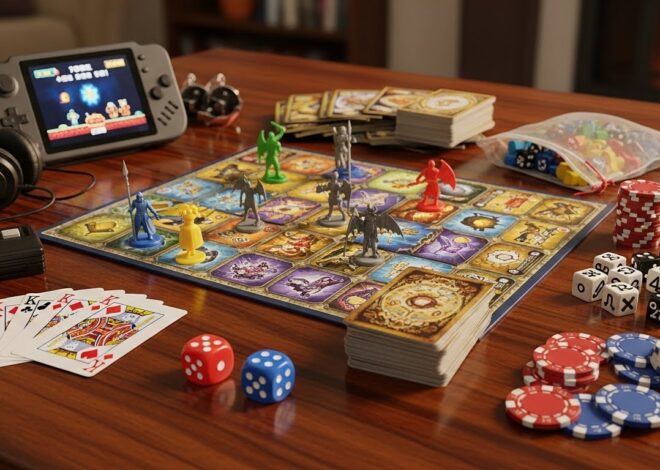

Exploring Video Games with Unique Concepts: The Art of Innovation in Gaming
Video games have come a long way since the days of simple 2D pixel art and straightforward mechanics. As the gaming industry has grown, so too has its ability to craft complex worlds, compelling stories, and innovative gameplay experiences. While many games follow well-established genres and mechanics, there is an emerging group of titles that take risks with their designs, pushing the boundaries of what games can achieve. These games, with their unique concepts and innovative ideas, not only captivate players but also redefine the way we think about video game storytelling and gameplay.
In this blog post, we will explore several of these groundbreaking titles, examining what makes them stand out from the crowd. From narrative-driven experiences that challenge our perceptions to games that experiment with gameplay mechanics in new and exciting ways, we’ll take a closer look at how these games have redefined the gaming landscape. Let’s dive into the world of truly unique games that break away from the norms and offer something fresh and original.
The Rise of Innovation in Game Design
In an industry saturated with sequels, remakes, and established franchises, it can be easy for new games to slip through the cracks. However, in recent years, we’ve seen a wave of indie developers and larger studios alike embracing the idea of “thinking outside the box” when it comes to game design. These games go beyond just offering fun experiences; they challenge the player’s assumptions, push boundaries, and experiment with new concepts.
Innovation in game design doesn’t always mean reinventing the wheel; sometimes, it’s about exploring unexplored niches or taking an existing idea and giving it a fresh twist. It’s about creating experiences that resonate on an emotional level or making gameplay so engaging that players forget they’re even playing a game.
Let’s take a look at some examples of games that have managed to achieve this feat, using unique concepts that make them stand out from the crowd.
Journey: The Power of Silence and Emotion
One of the most notable examples of a game with a unique concept is Journey, developed by Thatgamecompany and released in 2012. Unlike most games that use dialogue or written storytelling to convey their narratives, Journey takes a minimalist approach, telling its story through environmental cues, visuals, and music. Players control a robed figure traveling across a vast desert landscape, with the goal of reaching a distant mountain.
What makes Journey unique is its lack of conventional gameplay mechanics and its focus on emotional connection. There are no NPCs to interact with or lengthy dialogues to follow. The game’s entire narrative is conveyed through the exploration of the desert environment and the use of ambient sound. This design decision creates a sense of tranquility, allowing players to immerse themselves in the world and reflect on their journey.
In addition, Journey incorporates a multiplayer element that is both innovative and emotionally powerful. Players can encounter other travelers in the desert, but they cannot communicate directly. There are no words exchanged, only silent gestures and movements. This creates a sense of shared experience, where players are not just interacting with the game world but with each other in a subtle and meaningful way.
The game’s unique design and emotional depth have earned it widespread acclaim, demonstrating how a game can connect with players on a deep level without relying on traditional storytelling or mechanics.
Braid: A Puzzle Platformer with a Twist on Time
Another example of a game that pushed the boundaries of its genre is Braid, created by Jonathan Blow and released in 2008. On the surface, Braid appears to be a standard puzzle-platformer with bright visuals and familiar mechanics. However, it introduces a groundbreaking gameplay mechanic that sets it apart: the ability to manipulate time.
In Braid, players control Tim, a man on a quest to rescue a princess. While this premise may seem familiar, the core mechanic revolves around the manipulation of time. Players can rewind time to correct mistakes or solve puzzles, which adds a layer of complexity and creativity to the gameplay. Each world in the game introduces a new time-related mechanic, such as slowing down time, reversing the direction of time, or freezing time in certain areas.
But what truly sets Braid apart is its narrative. The story, told through a series of cryptic messages and subtle environmental cues, explores themes of regret, redemption, and the consequences of actions. The game’s ending is open to interpretation, with many players discussing and speculating about its deeper meaning. This unique combination of time-based gameplay and philosophical storytelling made Braid a standout title and a critical success.
Braid is a great example of how innovative gameplay mechanics can elevate a game beyond traditional puzzle-platformers and offer a meaningful, thought-provoking experience.
The Stanley Parable: A Game About Choice and Free Will
If there’s one game that truly challenges the concept of player agency, it’s The Stanley Parable. Released in 2013, The Stanley Parable is a first-person exploration game that takes players on a journey through a bizarre office building. The protagonist, Stanley, is instructed by an omniscient narrator who provides guidance throughout the game. However, players have the option to defy the narrator’s instructions, leading to multiple possible outcomes.
What makes The Stanley Parable unique is its exploration of choice and free will. In most games, players are presented with a clear goal, and their choices serve to advance the plot. However, in The Stanley Parable, the player’s choices often lead to absurd and humorous consequences, making the player question the concept of choice in video games. At one point, the game even allows players to “quit” and end the experience early, subverting the very idea of progression in gaming.
The game plays with the concept of narrative structure and challenges players to think about how their actions impact the story. It cleverly subverts expectations and explores the limitations of traditional game design, making it one of the most unique experiences in gaming.
Monument Valley: An Optical Illusion in Motion
In the realm of mobile gaming, Monument Valley stands as a shining example of how art and gameplay can merge to create a truly unique experience. Developed by Ustwo Games and released in 2014, Monument Valley is a visually stunning puzzle game that uses optical illusions and impossible architecture to create mind-bending puzzles.
In Monument Valley, players guide a character named Ida through a series of levels, each one designed with Escher-inspired geometry and perspective tricks. The goal is to manipulate the environment by rotating and shifting parts of the world to create paths and solve puzzles. The game’s minimalist art style, combined with its soothing soundtrack, creates an immersive atmosphere that is both calming and mentally stimulating.
What makes Monument Valley unique is its ability to blend optical illusions with gameplay. Each level presents a new puzzle that requires players to think outside the box, using perspective and environmental manipulation to solve it. The game’s visual design is not just a backdrop; it is an integral part of the gameplay experience.
Monument Valley is a perfect example of how mobile games can deliver innovative and visually captivating experiences, proving that even on smaller platforms, there is room for creativity and artistic expression.
Papers, Please: The Ethics of Bureaucracy
In the world of indie games, Papers, Please stands as one of the most thought-provoking titles of recent years. Developed by Lucas Pope and released in 2013, Papers, Please is a dystopian simulation game where players take on the role of a border inspector in the fictional country of Arstotzka. As an inspector, your job is to process documents and determine who is allowed to enter the country.
While this may sound like a simple task, Papers, Please introduces a unique moral dilemma. Throughout the game, players are faced with increasingly difficult decisions, such as whether to allow a desperate family into the country or to enforce the strict rules set by the government. Each decision has consequences, affecting the lives of the people you encounter and the story’s progression.
What makes Papers, Please so unique is its exploration of morality within the confines of bureaucracy. The game forces players to confront difficult ethical choices, making them consider the human cost of their actions. It’s a game that doesn’t just challenge your puzzle-solving skills; it challenges your sense of right and wrong, making it a deeply impactful experience.
Conclusion: The Future of Unique Games
The games we’ve discussed here are just a small sampling of the innovative and unique titles that have reshaped the gaming landscape. From emotional experiences like Journey to time-bending puzzles in Braid, and narrative experiments in The Stanley Parable, these games have redefined what is possible in the world of video games. They demonstrate that games can be more than just entertainment—they can be vehicles for artistic expression, philosophical exploration, and emotional connection.
As the gaming industry continues to grow and evolve, we can only expect more groundbreaking titles that push the boundaries of what games can be. Whether through innovative gameplay mechanics, bold narrative choices, or unique artistic styles, these games show us that the future of gaming is anything but predictable.
For players seeking something truly unique, the world of video games is full of surprises. With so many games breaking new ground, there’s never been a better time to explore the creative and innovative world of gaming.