Gaming Unleashed: How Video Games Shape Entertainment, Culture, and Society
Introduction: The Rise of Gaming as a Cultural Phenomenon
Gaming is no longer just a hobby or a pastime; it has evolved into a global phenomenon that influences entertainment, culture, and even social interaction. From simple pixelated games in the 1980s to hyper-realistic, open-world experiences today, the gaming industry has undergone an incredible transformation. Video games now captivate millions of players worldwide, offering immersive worlds, challenging gameplay, and storytelling that rivals Hollywood movies. Beyond entertainment, gaming affects social behaviors, education, technology development, and even the economy. In this blog, we explore how games have evolved, their impact on society, the rise of eSports, and what the future holds for this ever-expanding industry.
The Evolution of Games: From Pixels to Realism
The history of video games traces back to the mid-20th century when simple experiments in digital entertainment were first conducted. Early titles like “Pong” and “Space Invaders” introduced the concept of interactive gameplay, capturing the curiosity of players. These games were simple by modern standards but laid the foundation for the gaming industry.
The 1980s and 1990s saw significant technological advancements with home consoles such as the Nintendo Entertainment System and Sega Genesis. These consoles popularized genres like platformers, role-playing games, and arcade-style shooters, creating franchises that remain iconic today. Graphics, sound, and gameplay complexity improved, drawing more people into the world of gaming.
The turn of the 21st century marked the era of online gaming. Multiplayer experiences like “World of Warcraft” and “Counter-Strike” allowed players to interact in virtual worlds, fostering communities and introducing competitive gaming on a massive scale. Today, high-end consoles and gaming PCs offer photorealistic graphics, dynamic storytelling, and virtual reality experiences, making gaming an immersive and highly engaging form of entertainment.
Gaming as a Social Platform: Community and Connectivity
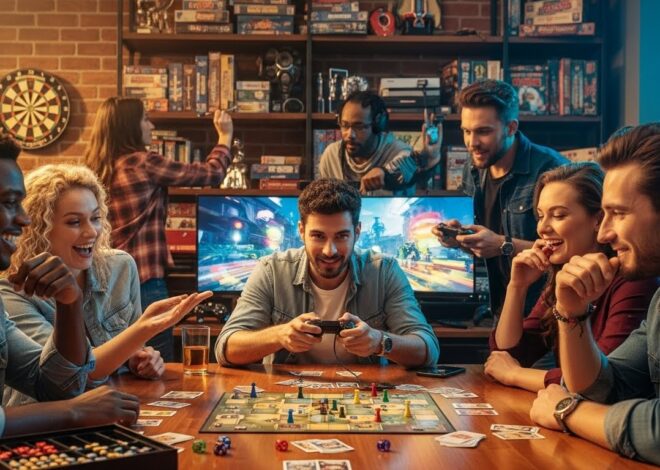
Modern gaming is as much about social interaction as it is about gameplay. Online multiplayer games, live streaming, and social platforms built around gaming have created vibrant communities. Players can team up with friends, compete against strangers, and form long-lasting bonds through shared experiences.
Social interaction in games extends beyond casual conversation. Online communities host tournaments, strategy discussions, and fan-driven content creation. Streaming platforms such as Twitch and YouTube Gaming allow players to broadcast their gameplay, providing entertainment for millions of viewers and enabling professional gamers to build careers from their passion. Gaming has become a social space where people of all ages and backgrounds connect, collaborate, and compete.
The Educational and Cognitive Benefits of Gaming
While gaming is often viewed as purely recreational, research has shown that games can have significant educational and cognitive benefits. Strategy games, puzzles, and role-playing games enhance critical thinking, problem-solving skills, and decision-making. Multiplayer and cooperative games promote teamwork, communication, and leadership abilities.
Educational games have also emerged as a valuable tool for learning. Titles designed to teach coding, mathematics, or historical events engage players interactively, making learning both enjoyable and effective. Even fast-paced action games can improve hand-eye coordination, reflexes, and spatial awareness. Gaming demonstrates that entertainment and education can intersect, providing players with skills that extend beyond the digital realm.
eSports: Gaming as a Competitive Arena
The rise of eSports has transformed gaming from a hobby into a legitimate competitive industry. eSports involves professional players competing in games like “League of Legends,” “Dota 2,” “Fortnite,” and “Call of Duty” for substantial prize pools and international recognition. Major tournaments draw millions of viewers worldwide, rivaling traditional sports in popularity and spectacle.
eSports has created opportunities for professional gamers, coaches, analysts, and content creators. Teams are sponsored by major brands, and players can earn salaries, endorsements, and fame comparable to traditional athletes. The competitive gaming scene has also encouraged the development of specialized gaming hardware, performance analytics, and training programs, further professionalizing the industry.
Gaming Technology: Driving Innovation
Technology is the backbone of gaming, continually pushing the boundaries of what is possible. High-performance gaming PCs, advanced consoles, and cloud gaming services provide players with seamless, high-quality experiences. Virtual reality and augmented reality games are revolutionizing immersion, allowing players to step into fully interactive worlds.
Artificial intelligence (AI) has transformed game design, creating smarter non-player characters and adaptive gameplay that responds to player behavior. Procedural generation enables expansive, dynamic worlds that are different for each player, while physics engines make environments realistic and interactive. Gaming technology often drives broader technological innovation, influencing fields like graphics rendering, AI development, and human-computer interaction.
Cultural Influence of Games: Beyond the Screen
Video games have become a significant cultural force, influencing art, music, film, and fashion. Iconic franchises such as “The Legend of Zelda,” “Final Fantasy,” and “Grand Theft Auto” have inspired novels, movies, and merchandise, extending gaming’s impact beyond the digital realm.
Gaming culture has also shaped social identity. Cosplay, fan art, and streaming communities celebrate shared passions and creativity, creating a sense of belonging. Additionally, games often address complex social themes, exploring issues such as morality, politics, and personal identity, offering players opportunities for reflection and discussion. In many ways, games have become a medium of cultural expression comparable to literature or film.
The Economic Impact of Gaming
The gaming industry is one of the fastest-growing sectors of the entertainment market. Global gaming revenue is estimated to exceed $200 billion, fueled by game sales, microtransactions, subscriptions, and in-game purchases. Mobile gaming, in particular, has expanded access, allowing millions of people to engage with games on smartphones and tablets.
Beyond direct revenue, gaming drives employment and innovation. Game developers, designers, artists, writers, and engineers are all part of the ecosystem that creates and maintains games. Streaming platforms and content creators also generate income, demonstrating that gaming is not only entertainment but also a significant economic engine with global influence.
The Future of Gaming: Immersion, Accessibility, and Innovation
The future of gaming promises even more innovation and accessibility. Cloud gaming allows players to access high-quality games without expensive hardware, making gaming more inclusive. Virtual reality, augmented reality, and mixed reality will continue to enhance immersion, creating experiences that blur the line between the digital and physical world.
Artificial intelligence will drive adaptive storytelling and gameplay, offering personalized experiences for each player. Additionally, social and collaborative aspects of gaming will continue to grow, with shared virtual spaces becoming hubs for interaction, learning, and creativity. As technology advances, gaming is set to become an even more integral part of entertainment, education, and social interaction worldwide.
Conclusion: Gaming as a Multifaceted Force
Gaming has evolved from simple entertainment into a multifaceted industry that influences culture, technology, social interaction, and the economy. It connects people across the globe, provides educational and cognitive benefits, and fosters creative expression. With the rise of eSports, VR, and AI-driven gaming, the industry continues to grow and innovate, creating new opportunities and experiences for players of all ages.
The impact of gaming goes far beyond the screen. It shapes the way we socialize, learn, and engage with culture. In a rapidly changing digital world, gaming remains a powerful force, uniting millions of players in shared experiences while continuously pushing the boundaries of what entertainment can achieve. As technology and creativity advance, the future of gaming is limitless, promising new adventures, challenges, and connections for generations to come.