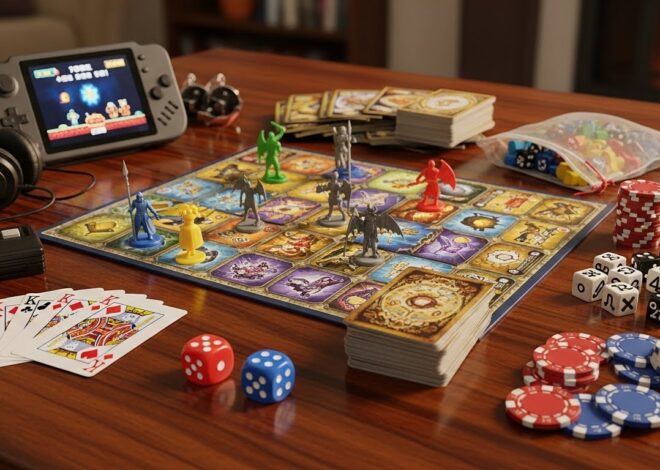

The Evolution of Gaming: A Journey Through Time
Gaming has come a long way since its inception. From humble beginnings to becoming a multi-billion-dollar industry, the evolution of gaming is a testament to how technology, creativity, and culture can intersect. What began as a simple way to pass the time has transformed into a global phenomenon, with millions of people around the world engaging in video games every day.
In this blog post, we will explore the history of gaming, the significant milestones that have shaped the gaming industry, and the impact it has had on culture, technology, and society.
The Early Years of Gaming: A Humble Beginning
The history of gaming can be traced back to the early 1950s when computers were still a novelty. The first video game ever created was a simple tennis game called Tennis for Two. It was developed by physicist William Higinbotham in 1958 and displayed on an oscilloscope screen. This game was groundbreaking at the time, but it was not until the 1970s that video games began to evolve into what we would recognize today.
In 1972, Atari released Pong, the first commercially successful video game. A simple ping-pong simulation, Pong marked the beginning of the arcade game era. This game became a massive hit and established the foundation for the video game industry.
Atari’s success led to the rapid growth of arcade gaming throughout the 1970s and 1980s. Classic arcade games like Space Invaders, Pac-Man, and Donkey Kong became cultural icons. The arcade became the place to be for gamers, and a new form of entertainment was born.
The Home Console Revolution: Gaming Becomes Personal
While arcades were the dominant form of gaming in the 1970s and early 1980s, the next major milestone in gaming history came with the advent of home consoles. The idea of playing games at home was revolutionary, and it was made possible by companies like Atari, Nintendo, and Sega.
In 1977, Atari released the Atari 2600, one of the first home video game consoles. The Atari 2600 allowed players to play video games on their own television sets, and it brought gaming into the living room. Although the Atari 2600 was not the first home console, it was the most successful and became a major part of gaming culture in the late 1970s and early 1980s.
However, the rise of home consoles was not without its challenges. The early 1980s saw the rise of an oversaturated market. Hundreds of poorly designed and low-quality games flooded the market, which led to the video game crash of 1983. This was a major setback for the gaming industry, but it was not the end of video gaming.
The Rise of Nintendo and Sega: The 8-bit and 16-bit Era
After the video game crash of 1983, the gaming industry needed a revival. Enter Nintendo and Sega, two companies that would become giants in the gaming world.
In 1985, Nintendo released the Nintendo Entertainment System (NES) in North America, which would go on to become one of the most successful video game consoles of all time. The NES revived the gaming industry, and games like Super Mario Bros., The Legend of Zelda, and Metroid helped solidify Nintendo’s dominance in the market.
Meanwhile, Sega entered the console wars with the Sega Genesis, which was released in 1989. The Genesis was a major competitor to the NES, and it brought with it iconic games like Sonic the Hedgehog, Streets of Rage, and Mortal Kombat. The rivalry between Nintendo and Sega helped fuel the growth of the gaming industry throughout the late 1980s and early 1990s.
During this time, the gaming industry also saw the introduction of 16-bit graphics, which allowed for more detailed and colorful visuals. This new technology enabled game developers to create more immersive and visually appealing games, further elevating the gaming experience.
The Birth of 3D Gaming: PlayStation and the 32-bit Era
The 1990s were a pivotal decade for the gaming industry. One of the most significant advancements during this time was the introduction of 3D graphics. While 3D gaming had been experimented with before, it wasn’t until the mid-1990s that it became a mainstream feature.
In 1994, Sony entered the gaming market with the release of the PlayStation. The PlayStation was a groundbreaking console that featured advanced 3D graphics, and it quickly became a major player in the gaming industry. Games like Final Fantasy VII, Gran Turismo, and Crash Bandicoot became staples of the PlayStation’s library and helped define the console generation.
The PlayStation’s success marked a shift in the gaming industry, as 3D graphics began to dominate. The 32-bit era also saw the rise of other consoles like the Sega Saturn and the Nintendo 64. The Nintendo 64, in particular, was known for its innovative 3D games like Super Mario 64 and The Legend of Zelda: Ocarina of Time, which are still regarded as some of the greatest video games of all time.
The introduction of 3D graphics not only changed the way games looked but also how they were played. 3D environments allowed for more exploration and interaction, and it gave birth to new genres like first-person shooters and open-world games.
The Advent of Online Gaming: The Next Frontier
As the 2000s approached, the gaming industry underwent another transformation with the rise of online gaming. The ability to connect to the internet and play with others in real-time was a game-changer, and it opened up new possibilities for multiplayer experiences.
In 2000, Microsoft released the Xbox, a console that was designed with online gaming in mind. The Xbox Live service, which launched in 2002, allowed players to connect to the internet and play games like Halo 2 against others around the world. This marked the beginning of online multiplayer gaming as we know it today.
Sony also embraced online gaming with the release of the PlayStation 2 and the PlayStation 3, which offered online multiplayer capabilities. The rise of online gaming gave birth to massively multiplayer online role-playing games (MMORPGs) like World of Warcraft and EVE Online, which allowed players to interact with thousands of others in virtual worlds.
The online gaming revolution was not limited to consoles. PC gaming also saw a surge in popularity during this time, thanks to online platforms like Steam, which made it easier to purchase, download, and play games. The rise of eSports, competitive gaming tournaments, and live streaming platforms like Twitch also played a major role in the growth of the online gaming scene.
The Modern Gaming Era: High-Definition Graphics and Virtual Reality
The 2010s and beyond brought even more technological advancements to the gaming industry. High-definition graphics became the standard, and consoles like the PlayStation 4 and Xbox One pushed the limits of visual fidelity. Games like The Witcher 3: Wild Hunt, Red Dead Redemption 2, and Horizon Zero Dawn showcased stunning open-world environments and realistic character models.
One of the most exciting developments in modern gaming is the rise of virtual reality (VR). VR technology has the potential to completely change the way we experience games, offering a level of immersion that was previously unimaginable. The release of VR headsets like the Oculus Rift, HTC Vive, and PlayStation VR brought virtual reality into the mainstream, and developers are beginning to create VR experiences that rival traditional gaming.
In addition to VR, the gaming industry has seen the rise of cloud gaming, which allows players to stream games without the need for powerful hardware. Services like Google Stadia, Microsoft xCloud, and NVIDIA GeForce Now are paving the way for a future where players can access their games from any device with an internet connection.
The Impact of Gaming on Culture and Society
Gaming has evolved from a niche hobby to a global cultural force. Today, gaming is an integral part of pop culture, with major gaming franchises like Fortnite, Minecraft, and Call of Duty becoming household names. Video games have influenced music, movies, and even fashion, as gamers around the world engage with these franchises in various ways.
The impact of gaming extends beyond entertainment. Many games are now used as educational tools, with game-based learning becoming increasingly popular in schools. Games like Minecraft and Kerbal Space Program have been used to teach students about subjects like mathematics, engineering, and history.
Gaming has also become a powerful platform for social interaction. Online multiplayer games allow players to connect with friends and strangers from all over the world, and many gaming communities have formed around specific games or genres. Twitch and YouTube have also become major platforms for gamers to share their experiences and build communities.
Furthermore, gaming has had a significant impact on mental health. While there are concerns about gaming addiction, research has shown that video games can have positive effects on cognitive function, problem-solving skills, and even stress relief. Games like Animal Crossing: New Horizons and Stardew Valley provide a relaxing and escapist experience for players, offering a sense of comfort and tranquility in a chaotic world.
The Future of Gaming: What’s Next?
As technology continues to advance, the future of gaming looks incredibly exciting. With the rise of artificial intelligence, machine learning, and more powerful hardware, games will continue to become more immersive and complex. We can expect to see even more realistic graphics, more expansive open worlds, and more sophisticated AI-driven narratives.
The integration of augmented reality (AR) and virtual reality (VR) will also continue to evolve, blurring the lines between the digital and physical worlds. It’s possible that, in the future, we will see fully immersive