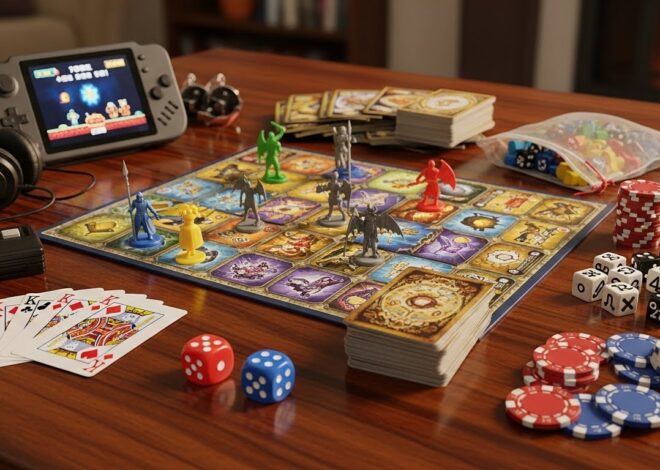

The Magic of Games: A Journey Through Play and Innovation
Introduction: The Universal Appeal of Games
Games have long been an essential part of human culture and society. From ancient board games to the expansive digital universes we explore today, gaming has evolved into one of the most influential forms of entertainment worldwide. It connects people of all ages, backgrounds, and experiences, offering both relaxation and challenge. As technology advances, so too does the complexity and appeal of games, enabling players to experience a level of immersion and excitement previously unthinkable. In this blog, we will explore the rich history of games, their evolution into digital formats, and their ongoing impact on culture, technology, and society.
The Origins of Games: From Ancient Civilizations to Modern Play
The concept of games dates back thousands of years, with evidence of game-playing cultures found in civilizations across the world. In ancient Egypt, the game Senet was one of the earliest known board games, dating back to around 3100 BCE. This game, believed to represent the journey of the soul, was not just a form of entertainment, but also a spiritual and cultural symbol. Similarly, in ancient China, the game Go was invented over 2,500 years ago and remains one of the most intellectually demanding games today.
The Greeks and Romans also enjoyed their share of games, with board games like Tabula and Latrunculi that were strategic in nature and offered a mix of skill and luck. These early games often served as more than just a form of amusement—they were ways to socialize, sharpen intellect, and experience competition in a controlled environment.
As the centuries passed, the evolution of games continued, moving from the realms of physical play to abstract strategy games and eventually onto the pages of literature and mass-produced cards, creating games that could be played indoors and in social settings.
The Birth of Modern Gaming: A Digital Revolution
The rise of video games marks a turning point in the history of games, ushering in an era of technological innovation and interactive entertainment. The first video game, Pong, created in 1972 by Atari, may have been simple in its execution, but it marked the beginning of a new frontier in gaming. This simple ping-pong style game, with its basic graphics and rules, quickly captured the attention of players worldwide and sparked a wave of arcade games.
In the following decades, the gaming landscape was transformed with the release of home consoles like the Atari 2600, the Nintendo Entertainment System (NES), and the Sega Genesis. These consoles brought video games into homes across the globe, offering immersive experiences with increasingly advanced graphics, sound, and gameplay.
The 1990s introduced an even more sophisticated era of gaming with the rise of 3D graphics. The Sony PlayStation and Nintendo 64 made it possible for developers to create vast, fully-realized virtual worlds, offering players experiences that felt real and dynamic. Games like Super Mario 64, The Legend of Zelda: Ocarina of Time, and Final Fantasy VII became iconic, not only for their gameplay mechanics but also for their storytelling and world-building.
The Evolution of Online and Multiplayer Gaming
While single-player experiences were dominant in the early years of gaming, the rise of the internet in the late 1990s and early 2000s changed the landscape once again. The introduction of online multiplayer gaming made it possible for players to connect across the world and engage in real-time competition. The launch of World of Warcraft in 2004 is often considered one of the most significant milestones in the development of online gaming, with millions of players across the globe entering a shared virtual world.
Multiplayer games such as Counter-Strike and StarCraft also became staples of the online gaming culture, encouraging teamwork, strategy, and skill. These games, coupled with the growing popularity of esports, laid the foundation for the competitive gaming scene we see today, where players can earn fame and fortune through professional competitions.
Today, the online gaming community is a vibrant and diverse ecosystem, with massive multiplayer online role-playing games (MMORPGs), first-person shooters (FPS), and battle royale games, such as Fortnite and PUBG, offering a mix of entertainment, social interaction, and competition. Online multiplayer games have also become platforms for social interaction, where players build friendships, join guilds, and communicate across borders, creating a truly global gaming experience.
Mobile Gaming: Entertainment at Your Fingertips
The emergence of smartphones has brought about another significant shift in the gaming industry: mobile gaming. Mobile devices have allowed gaming to reach a vast, global audience, making it possible to play games anywhere and anytime. With games like Angry Birds, Clash of Clans, and Candy Crush, mobile gaming has captured the hearts of both casual and hardcore gamers, offering quick, accessible gameplay on the go.
What makes mobile gaming so appealing is its ease of access. The ability to download a game in seconds, play it on a bus ride, or relax with a few rounds of a puzzle game makes it incredibly convenient. Mobile gaming also allows players to enjoy a wide variety of genres, from casual games to more intricate experiences, and this broadens the appeal of games to a much wider demographic. With the advent of cloud gaming, even more complex games can now be played on mobile devices, further pushing the boundaries of what is possible on small screens.
The Impact of Games on Society and Culture
Games have always been more than just entertainment—they have shaped culture, fostered social interaction, and even influenced other art forms. Over the years, games have become a medium for storytelling, allowing players to engage with narratives in ways that books or movies cannot. Games like The Last of Us and Red Dead Redemption 2 have set new standards for storytelling in video games, blending cinematic quality with player-driven decisions, and creating emotionally compelling journeys.
Moreover, gaming has also contributed to the development of new forms of art. The visuals in many modern games are a testament to the incredible advancements in technology, with studios employing talented artists, animators, and composers to create visually stunning worlds and unforgettable soundtracks. Games like Journey and Horizon Zero Dawn have been hailed as art pieces for their breathtaking visuals, evocative soundtracks, and emotional depth.
Gaming has also had a profound effect on the way we socialize. The rise of online communities, multiplayer experiences, and esports tournaments has created a digital space where people can interact, form friendships, and engage in shared experiences. Online gaming has become an avenue for global interaction, where individuals from diverse backgrounds and countries can come together over a common interest. Games have broken down social barriers, creating new forms of connection and a sense of community that transcends geographic boundaries.
The Rise of Esports and Professional Gaming
In recent years, esports has emerged as one of the most popular and lucrative segments of the gaming industry. Esports refers to competitive video gaming, where professional players and teams compete in organized tournaments for large cash prizes. Games such as League of Legends, Dota 2, and Overwatch have become staples of the esports scene, attracting millions of viewers and creating a multi-billion-dollar industry.
Professional gaming has also spawned a new type of celebrity, with top players gaining massive followings on streaming platforms like Twitch and YouTube. Esports tournaments are now broadcast on television and streamed online, drawing millions of viewers and sponsorship deals from major brands. What was once a niche hobby has become a global phenomenon, with esports arenas hosting live events that rival traditional sports in terms of attendance and viewership.
The Future of Gaming: Virtual Reality and Beyond
As technology continues to evolve, so too does the potential of gaming. One of the most exciting frontiers of gaming is virtual reality (VR), which promises to take immersion to the next level. With VR headsets, players can fully immerse themselves in virtual worlds, experiencing a level of interactivity and realism that was once the stuff of science fiction. Games like Beat Saber and Half-Life: Alyx have already demonstrated the potential of VR, offering players fully interactive experiences that engage not only the senses but also the body.
Looking even further ahead, augmented reality (AR) and mixed reality (MR) could bring about a new era of gaming where digital elements are seamlessly integrated with the real world. Pokémon Go was a groundbreaking example of AR gaming, where players could interact with virtual characters in real-world environments. As technology advances, we can expect even more innovative forms of gaming that combine physical and digital spaces in exciting and unexpected ways.
Cloud gaming is also on the rise, offering players the ability to play high-quality games without the need for expensive hardware. Services like Google Stadia and NVIDIA GeForce Now allow gamers to stream games directly from the cloud, eliminating the need for consoles or high-powered PCs.
Conclusion: The Enduring Legacy of Games
From ancient board games to the digital universes of today, games have evolved into a powerful force that shapes culture, fosters community, and provides endless hours of entertainment. Whether it’s the thrill of competition in esports, the joy of casual mobile gaming, or the immersive experiences of virtual worlds, games offer something for everyone. As technology continues to push the boundaries of what’s possible, the future of gaming holds exciting possibilities that will continue to captivate players for generations to come. In the end, games are more than just a form of entertainment—they are a reflection of our creativity, our desire for connection, and our ever-evolving relationship with technology.